The main speech bubble types distinguish spoken dialogue, thoughts, shouts, whispers and transmitted voices. Caption boxes add narration or an inner voice. Read the outline together with the tail, words and scene: no shape explains the whole conversation by itself.
Use this guide to choose a shape, then compare it on your own image in the comic speech bubble maker. Start with what the character means, then choose how the words should look.
What is a speech bubble or speech balloon?
A speech bubble is a container for words within an image, usually with a tail identifying the speaker. “Speech balloon” is another name for it. A thought bubble presents an inner thought, while a caption can introduce a narrator, location or time.
Separate meaning from appearance. An oval and a rounded rectangle can both hold an ordinary spoken line. A tall oval is a proportion, and a pixel border is a visual style. Neither automatically gives a line a new narrative role.
Speech bubble shapes and meanings at a glance
| Type | Visual cue | Usual job |
|---|---|---|
| Speech | Smooth outline and pointed tail | Audible dialogue |
| Thought | Cloud and circle trail | An inner thought |
| Shout | Jagged burst | A raised voice |
| Whisper | Dashed outline | A quiet voice |
| Broadcast | Electric outline or tail | Speech through a device |
| Caption | Box, often without a tail | Narration, time, location or inner voice |
| Tall oval / pixel | Proportion or border treatment | A style choice; interpret the scene |
Blambot’s Comic Book Grammar & Tradition describes the thought, shout, whisper, radio and caption conventions above. Piekos also notes that editorial preferences vary. The tall and pixel examples are design options in our library.
Keep the same line while you change the selected balloon’s shape. Compare what the outline suggests before changing the words.
Try it in the comic makerEight original bubble examples to compare
Imagine a scene at a locked door. The lines below demonstrate different voices within that setting; they are separate examples, not one continuous conversation.
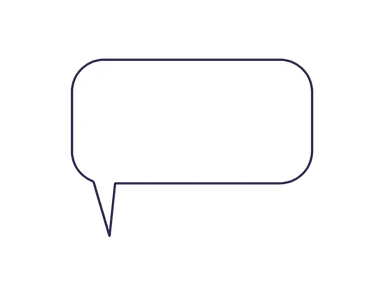
Speech: an audible line
“The door is open.”
Try this for an ordinary spoken observation. Put the tail toward the person saying it, and check that their reply follows in order.
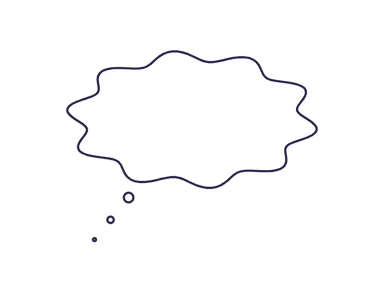
Thought: a private line
“I hope nobody saw me.”
Use the cloud and circle trail to mark this as an inner thought. A second character should not answer it unless your story explains how they heard it.
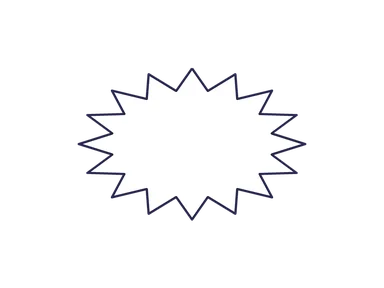
Shout: a raised voice
“Get away from the door!”
A burst suits this urgent warning. Try a smooth balloon as a comparison: does the warning still have the intensity the scene needs?
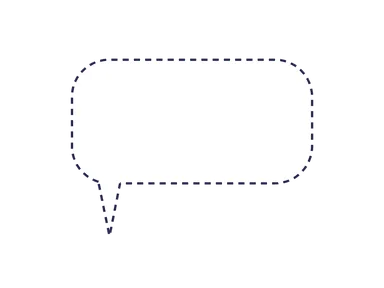
Whisper: a quiet voice
“Don’t wake the guard.”
A dashed outline is a conventional whisper treatment. Keep the words readable; the quietness can come from the outline and the scene.
Caption: a narrative voice
“Three minutes earlier.”
This box introduces a time change. Give it a place before the action it frames. The same basic box can also carry a character’s inner narration.
Broadcast: a transmitted voice
“Control, the door is open.”
Try the radio shape when the line arrives through a device. Make the source clear in the artwork so the reader can distinguish it from a nearby shout.
Tall oval: a different proportion
“You came back?”
Compare this narrow shape with the wider speech balloon. Use the one that accommodates your text and available space without squeezing the lettering.
Pixel: a visual treatment
“Door unlocked.”
A stepped border can suit a retro scene or game mockup. Treat it as a style choice; decide separately whether the words are spoken, thought or narrated.
The thought trail, dashed whisper and broadcast cues follow the Blambot reference. The suggested lines and shape comparisons are exercises you can adapt to your own scene.
Speech bubble vs. thought bubble: who can hear the line?
Take “I left the key inside.” In an ordinary speech balloon, the character admits it aloud. In a thought cloud, the reader sees the admission while the other character may remain unaware.
That difference affects the next reply. “Then go and get it” follows naturally after the spoken admission. After a private thought, it would need another explanation. Changing the shape can therefore require a script change too.
A box can also carry an inner voice. Blambot’s caption section distinguishes internal monologue from time, location, spoken and editorial captions. Identify whose voice the box contains instead of treating every rectangle as an outside narrator.
How should you interpret manga text bubble types?
Use the visual language of the particular work as your guide. Compare the balloon with the character’s expression, text treatment and nearby panels before assigning it an emotion. A search chart with one emotion per outline can give more certainty than the artwork supports.
Also check the edition’s reading direction. In his comic and manga layout tutorial, Steve Ellis contrasts the usual Western path with the right-to-left direction used for manga layouts. Follow the page you are actually lettering. Our manga speech-bubble reading example shows a complete three-line exchange.
For an English line in a narrow balloon, try a different line break or a wider shape. Preserve the words’ reading order while you adjust the fit. A tall outline does not require you to force horizontal English text into a cramped column.
For a practical check, write the same short exchange in two smooth balloons first. Once the sequence is easy to follow, try a burst or another treatment where the scene calls for it. This is a suggested exercise, not a rule for all manga.
Where should the tail point?
For speech, aim toward the mouth; for a thought trail, lead toward the head. These are the distinctions in Blambot’s tail and thought-balloon guidance.
In the locked-door scene, put “The door is open” above its speaker and move the tip until it identifies that person. If the tip sits between two faces, reposition it or move the whole balloon. For a voice coming through a radio, make the device the clear source of the message.
What order should bubbles follow?
Todd Klein’s placement guide recommends an English reading route from left to right and down, with balloon placement helping readers through the page.
Test our two-line example: “Did you bring the key?” followed by “I thought you had it.” Place the question before the answer, then check whether the tails still identify the right people. For an edition with another reading direction, adjust the route to match.
Choose a bubble for your own image
- Name the voice. Is this an audible line, a private thought, narration or a message through a device?
- Start with its role. Try ordinary speech for dialogue, a thought cloud for the private line, or a caption for a time change.
- Fit the text. Choose the proportions around your words rather than choosing a decorative outline first.
- Compare the tone. Try a shout or whisper treatment only where the scene supports that reading.
- Check the whole exchange. Read every line in sequence and confirm who knows what.
In Bubble Studio, clicking a palette shape changes the selected balloon; dragging a shape onto the canvas adds another. Use those two actions deliberately when comparing a treatment or adding the next reply.
To make the outline yourself, follow our step-by-step speech bubble drawing guide. It includes a cloud and circle-trail exercise for thoughts.
Common bubble mistakes and how to fix them
- A thought that another character answers. Decide whether the line should be audible, or explain how the reply connects.
- Every line in a burst. Compare a smooth outline for ordinary dialogue so the urgent line has a distinct treatment.
- A cloud interpreted without its trail. Check the tail and context before deciding that a decorative cloud is a private thought.
- A whisper made too small to read. Try a dashed outline while keeping the wording legible at the final size.
- A shape that wins over the text. Test a simpler outline, different proportions or a shorter line.
Speech bubble types FAQ
Is there a fixed number of speech bubble types?
This guide groups them by the role of the words and then shows some visual variations. You can draw many outlines for the same role, so our eight examples are a selection rather than an exhaustive classification.
Does a spiky bubble always mean anger?
Read the words and scene first. A shout can be a warning or an excited reaction; transmitted voices can also use electric outlines. The locked-door examples above show why the source of the line matters.
Can a caption contain a character’s thoughts?
Yes. An internal monologue caption is one of the caption uses described by Blambot. Keep the voice identifiable through the scene and a consistent treatment.
Where can I get blank shapes or learn to fit the text?
Download speech bubble PNG templates or thought cloud PNGs. For spacing, line breaks and a complete editing workflow, continue to the comic lettering guide.
Sources & further reading
The locked-door lines are invented to compare the role of each voice. The key exchange was entered into two separate dialogue balloons in the actual editor, with one tail per speaker. The shape examples illustrate conventions and possible choices; they are not a universal code for every comic or manga.
The references below support the conventions discussed here; they do not evaluate or endorse our examples. Sources checked on November 4, 2026.
- Nate Piekos / BlambotComic Book Grammar & Tradition
Balloon tails, thought trails, captions, whispers and broadcast voices. These are lettering traditions, with variation between editors and artists.
- Todd KleinBalloon Placement
Reading order, reserving room for dialogue, protecting important artwork and resolving awkward balloon placement.
- Steve Ellis / Art RocketPro Artist’s Guide to Comic & Manga Layouts, Paneling, Flow
Page flow and the different reading directions used for Western comics and manga.